

What Is Cobalt? Uses, Global Production and Its Role in Lithium-Ion Batteries
In 2024, roughly 76% of the cobalt mined worldwide was destined for battery manufacturing [1]. This figure highlights the now-central place this element holds in electrification technologies.
This trend is driven in particular by electric vehicles, which accounted for 43% of global cobalt demand in 2024 according to Natural Resources Canada [1], illustrating the structuring role this metal plays in energy storage systems and, more broadly, in value chains tied to the energy transition. Historically used to color glass and ceramics, cobalt has seen its applications evolve alongside the development of modern technologies.
This article explores the main characteristics that make cobalt essential to battery and energy storage technologies, as well as the other industrial sectors that depend on this strategic resource.
What is cobalt?
Definition and physical properties
Cobalt is a transition metal, meaning a chemical element belonging to the d-block of the periodic table, characterized by strong magnetic properties, high hardness, and the ability to form highly resistant alloys. Its chemical symbol is Co and its atomic number is 27.
Physically, it appears as a hard, lustrous, silvery-gray metal. This structural strength partly explains why it is mainly used as a cathode material in lithium-ion batteries: it stabilizes the electrode's internal structure and improves its energy density [1]. Cobalt also plays an essential role in human nutrition as a component of vitamin B12, which nicely illustrates the versatility of this element [1].
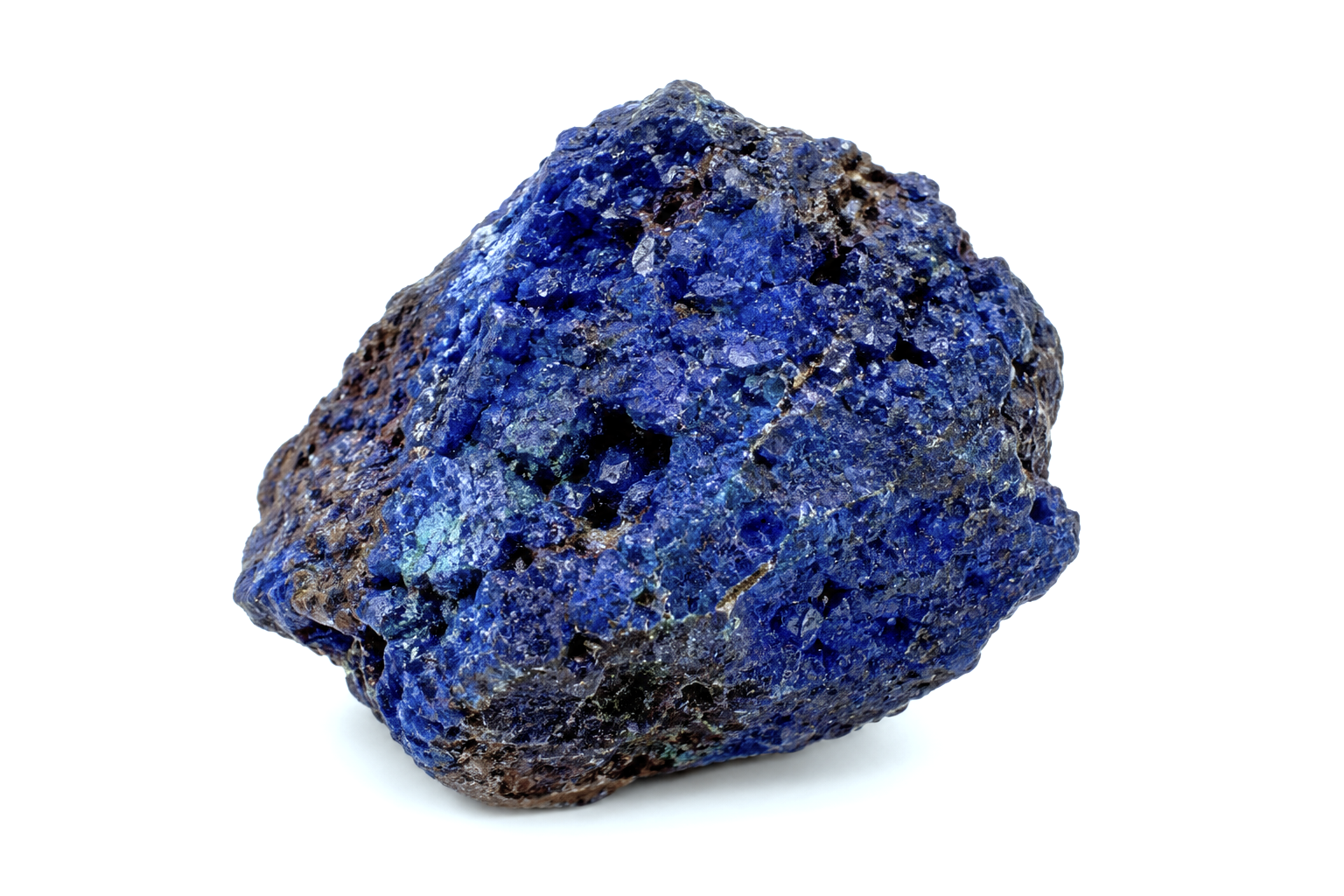
Cobalt's uses: far beyond batteries
In 2024, electric vehicles accounted for 43% of global cobalt demand, but this element also plays a key role in sectors as varied as aerospace, medicine, and oil refining [1].
Cobalt in batteries: role and importance
Lithium-ion batteries rely on a central component called the cathode, the positive electrode where reduction reactions occur during discharge. Within this electrochemical system, cobalt plays an important stabilizing role. It helps maintain the cathode's structural integrity, which improves the battery's energy density and supports better long-term durability. This role isn't unique to cobalt, but it remains decisive in several battery formulations used today.
In terms of applications, cobalt demand is largely driven by electrochemical storage technologies. According to Natural Resources Canada, most cobalt is used in batteries, with a breakdown that reflects the growing place of electrical applications in the global economy [1]. In 2024, electric vehicles represented the leading use of cobalt at 43% of global demand, followed by batteries for portable devices such as phones and computers, which accounted for 30% [1].
This demand pattern shows that cobalt is mainly drawn on by two complementary segments of the battery market: electric transportation, which concentrates the largest volumes, and portable electronic devices, which provide a more diffuse but steady demand. Together, these two uses largely dominate the metal's consumption profile.
Table 1: Global breakdown of cobalt uses
| Use | Global share (2024) |
|---|---|
| Electric vehicles | 43% |
| Portable batteries (phones, computers) | 30% |
| Ceramics, colorants and other uses | 9% |
| Superalloys | 8% |
| Hard metals | 4% |
| Other batteries | 3% |
| Catalysts | 3% |
(Source: Natural Resources Canada [1])
Advanced industrial applications
While batteries remain cobalt's main outlet, its industrial uses outside the energy sector are just as noteworthy. The element is found in high-performance alloys designed for extreme conditions, a feat few other materials can match. Sectors that depend on it include:
Civil and military aerospace draws on cobalt for manufacturing jet engines and high-performance gas turbines, where heat resistance is critical [3].
Industrial tooling uses cobalt-based hard alloys to make cutting tools and precision instruments whose durability is essential [3].
Oil refining and chemicals rely on cobalt-based catalysts for various industrial reactions [3].
Renewable electricity generation incorporates cobalt into the permanent magnets of wind turbine generators, which convert the blades' mechanical energy into electric current. Its presence allows these magnets to retain their magnetic properties at higher temperatures than those made purely of iron [2][3].
The medical field uses cobalt in the manufacture of orthopedic implants, in the detection of certain tumors, and in the synthesis of vitamin B12 [3].
From blue pigment to industrial metal: a long history
Long before its integration into battery technologies, cobalt was mainly known for its use in pigments. Its compounds have been used since antiquity to produce a deep blue in pottery, glass, paint, and enamel [3]. This distinctive coloring made it a valued material in artisanal and decorative traditions across the centuries.
Over time, its applications diversified beyond the artistic realm. Cobalt gradually found its place in more technical industrial uses, eventually becoming a key material in several advanced technologies today, notably batteries and specialized alloys.
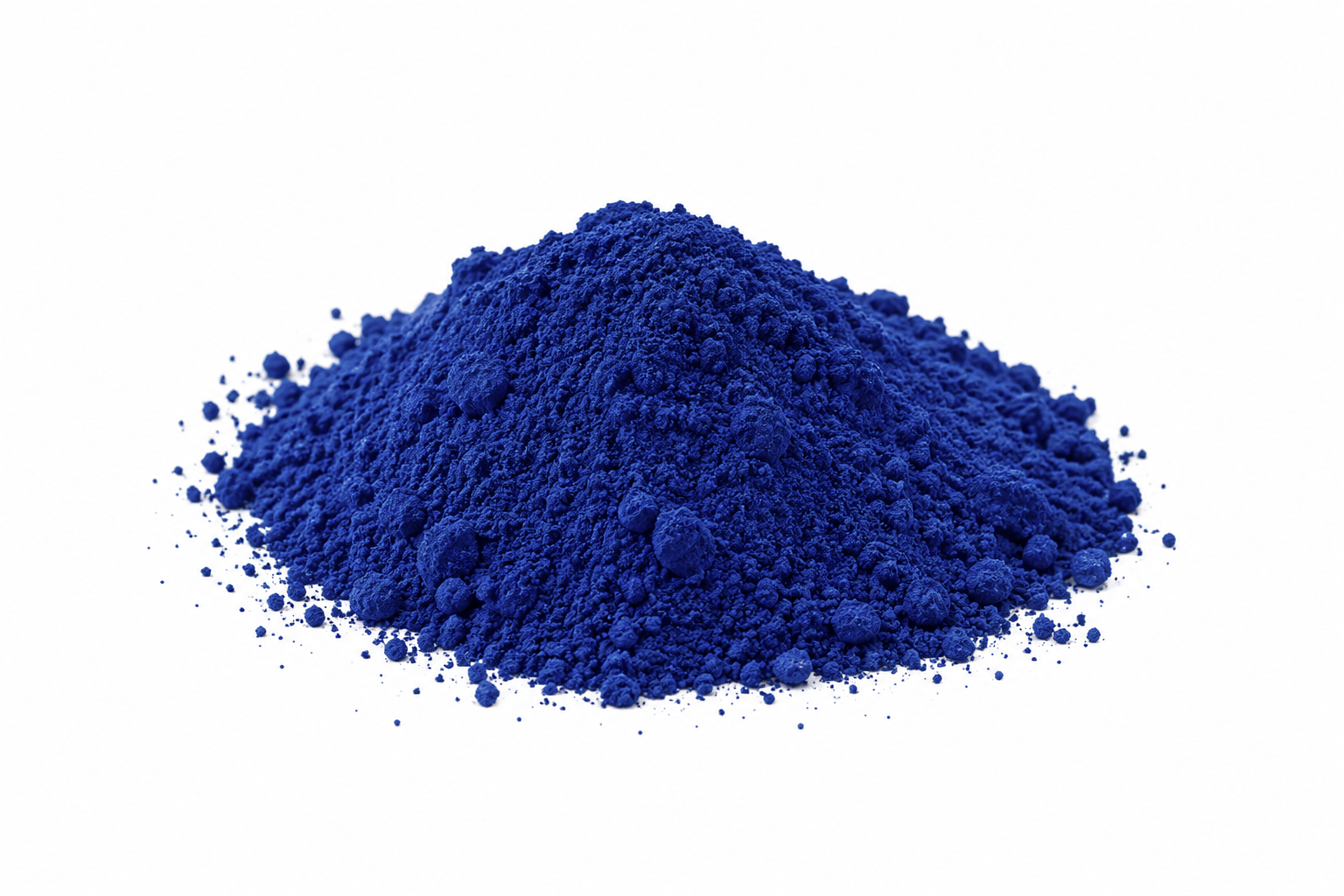
Image : Cobalt blue pigment
Cobalt as a support for decarbonization
Beyond its direct applications, cobalt indirectly contributes to greenhouse gas emission reduction efforts in two complementary ways.
Renewable energy storage Lithium-ion batteries containing cobalt make it possible to store electricity generated from intermittent sources like solar and wind. This energy can then be fed back into the grid during periods of low production, helping stabilize electricity supply and better integrate renewables into energy systems [3].
Optimizing refining processes Cobalt is also used in certain industrial catalysts employed in hydrocarbon refining. These processes help reduce the sulfur and nitrogen compound content of fuels, thereby limiting air pollutant emissions during combustion [3].
Where is cobalt found?
Global cobalt production is marked by strong geographic concentration. This setup makes the supply chain particularly sensitive to economic and industrial shifts, all the more so since cobalt is generally not mined as a primary product but recovered as a byproduct of extracting other metals.
A concentrated global production
It's important to understand that cobalt is mainly extracted as a byproduct, meaning a mineral recovered incidentally while mining another primary ore, in this case nickel or copper. Its availability therefore largely depends on extraction decisions tied to those other metals, which introduces a structural variability into global supply [1].
In this context, the Democratic Republic of Congo (DRC) holds a dominant position, contributing 76.6% of global mined cobalt production. Indonesia has recently emerged as the world's second-largest producer with 9.8% of output, driven by the rapid expansion of its nickel industry [1].
Table 2: Distribution of global cobalt reserves (2024)
| Ranking | Country | Tonnes | Percentage of total |
|---|---|---|---|
| 1 | Democratic Republic of Congo | 220,000 | 76.6% |
| 2 | Indonesia | 28,000 | 9.8% |
| 3 | Russia | 8,700 | 3.0% |
| 4 | Philippines | 3,800 | 1.3% |
| 5 | Australia | 3,600 | 1.3% |
| 6 | Cuba | 3,500 | 1.2% |
| 7 | Canada | 3,350 | 1.2% |
| 8 | Papua New Guinea | 2,800 | 1.0% |
| 9 | Turkey | 2,700 | 0.9% |
| 10 | Madagascar | 2,600 | 0.9% |
| – | Other countries | 8,000 | 2.8% |
| Total | 287,050 | 100.0% |
(Source: Natural Resources Canada [1])
Canada and Quebec in the global picture
Although global cobalt production is heavily concentrated in a few regions, Canada holds a notable place on the international stage. In 2024, Canadian mines produced approximately 3,350 tonnes of cobalt, output distributed mainly across Quebec (35%), Ontario (33%), Newfoundland and Labrador (28%), and Manitoba (4%) [1]. As in many producing countries, this output largely comes from nickel mining, of which cobalt is a byproduct.
Beyond production, Canada also holds a significant resource base, ranking it 7th worldwide [1]. This combination of current output and geological potential contributes to its role in discussions around diversifying critical mineral supply chains.
To go further: "What are Canada's critical and strategic minerals?"
Conclusion
Cobalt today holds an important place across several electrification technologies, including lithium-ion batteries, electric vehicles, and certain energy storage systems. Projections suggest global demand could multiply sixfold to thirtyfold by 2040 [2], underscoring its growing importance in energy transition value chains.
In this context, cobalt stands out both as a strategic material for electric mobility and energy storage, and as a concrete example of the challenges tied to critical minerals: availability, geographic concentration of production, and supply diversification.
To keep up with the latest news on critical minerals and the energy transition, follow Squatex on LinkedIn.
References
[1] Natural Resources Canada. "Cobalt Facts." Natural Resources Canada, Government of Canada, https://natural-resources.canada.ca/minerals-mining/mining-data-statistics-analysis/minerals-metals-facts/cobalt-facts.
[2] Géologie Québec. "Cobalt — Geoscience Knowledge Base." Ministère des Ressources naturelles et des Forêts du Québec, https://gq.mines.gouv.qc.ca/portail-substances-minerales/cobalt/.
[3] Cobalt Institute. "Cobalt Uses." Cobalt Institute, https://www.cobaltinstitute.org/global-cobalt/cobalt-uses/.
