

Chromium: A Critical Metal for Modern Industry
The value of U.S. chromium consumption reached $900 million in 2024, a rise of about 6% compared to 2023, a clear sign that industrial demand for this metal remains strong. [5]
Chromium mineral, classified as a critical mineral in Canada and in the European Union, plays a key role in stainless steel production, as well as in several strategic industrial applications. [1] However, its supply chain, concentrated among a limited number of producing countries, represents a risk factor for importing economies.
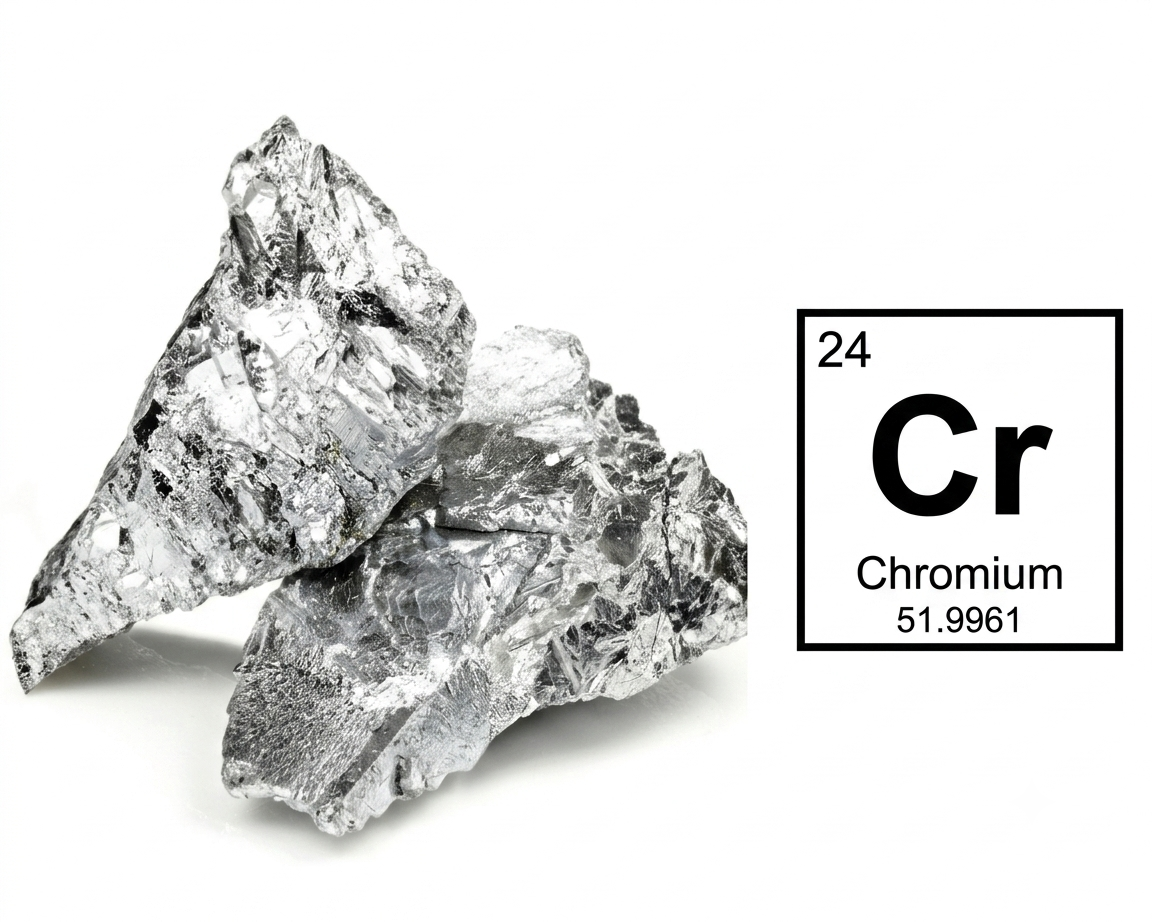
Why is chromium considered a critical metal?
The concept of a "critical metal" reflects both the economic importance of a material and the risks tied to its supply. In the case of chromium, this designation rests on criteria established by several international institutions, notably the European Union, which assess both the industrial role of a resource and the vulnerability of its supply chains.
Several factors explain why chromium falls within this category. It is indispensable to major sectors such as construction, electronics, aerospace, and defense, which form the backbone of modern economies. [1] At the same time, global production is concentrated in a handful of countries, notably South Africa, Kazakhstan, India, and Turkey, which heightens the risk of dependency and supply disruption. [1]
Adding to this is the absence of reliable substitutes for its most critical uses. Thanks to its distinctive properties, particularly its resistance to corrosion and high temperatures, chromium remains hard to replace in many industrial applications.
Given this context, the European Union and Canada have added chromium to their lists of critical raw materials, underscoring its strategic importance and the need to secure its long-term supply. [7]
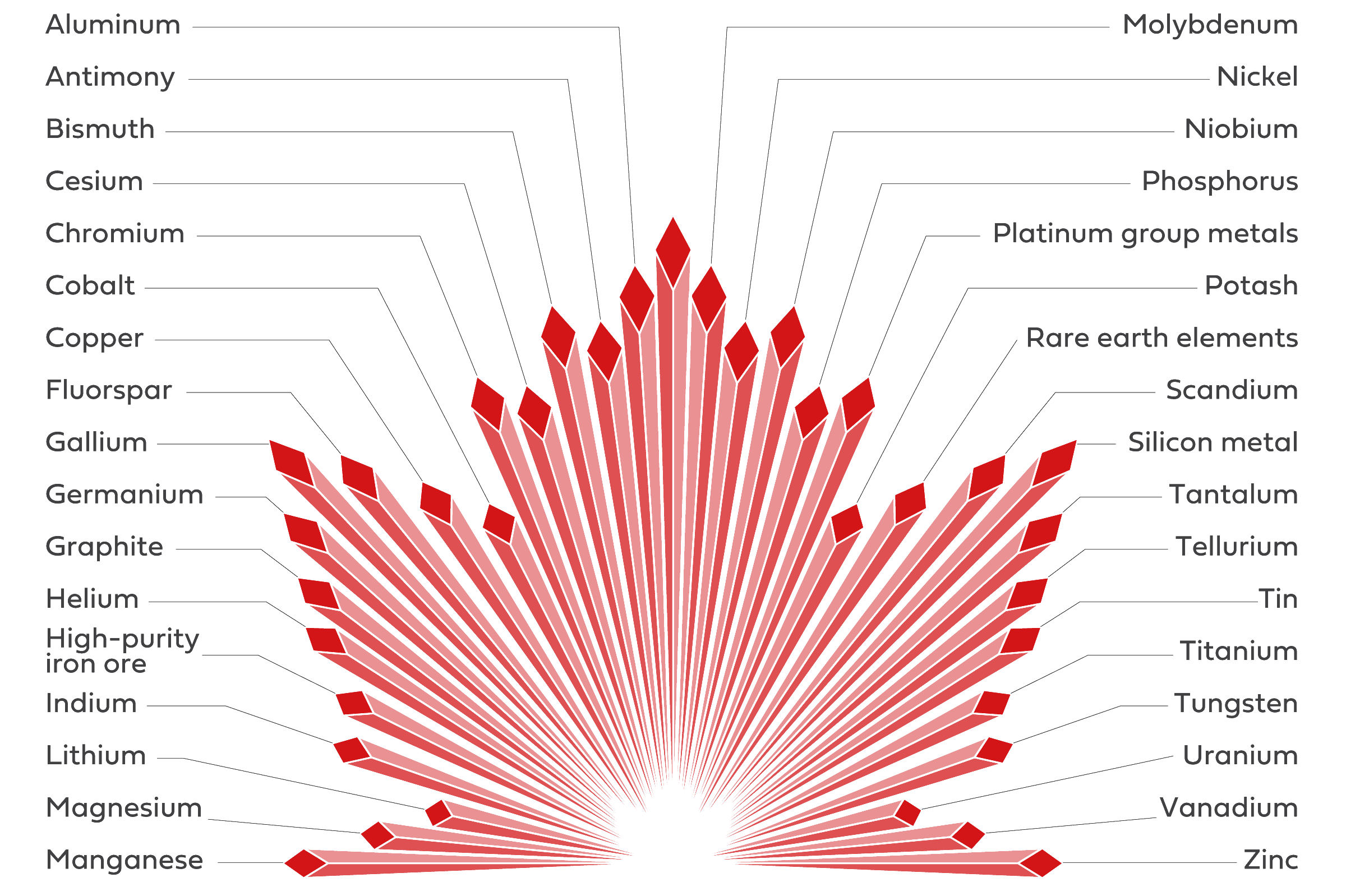
List of critical mineral Canada. Source: Canada.ca
The properties of chromium and its main user industries
One of the most remarkable properties of chromium is its ability to form a protective oxide layer on its surface, a phenomenon called passivation. This thin layer shields the metal from corrosion and considerably extends its service life, even in harsh environments.
In the case of stainless steel, it is the addition of chromium that activates this protective mechanism. For the layer to be effective, the steel must generally contain at least 10.5% to 12% chromium by weight. [4]
This property explains why stainless steel is widely used in settings exposed to moisture, chemicals, or elevated temperatures. Without chromium, the performance of these materials would be considerably reduced.
Industrial sectors that rely on chromium
Demand for chromium comes from a broad range of industries. Among the main consuming sectors in 2025:
Stainless steel and metallurgy: the top global outlet for chromium, through ferrochrome production, which supplies highly diverse markets worldwide.
Automotive: corrosion-resistant parts, structural components, and exhaust systems all benefit from chromium's durability.
Construction: long-lasting structures, coatings, and piping depend on chromium stainless steel for their longevity.
Aerospace and defense: high-performance alloys for engines, hulls, and military equipment require chromium's superior mechanical properties. [2]
Electronics: heat- and oxidation-resistant components incorporate chromium for reliability in demanding environments.
Food processing: stainless steel tanks, conveyors, and contact surfaces are essential to meeting sanitary standards throughout food processing chains. [3]
Energy transition: chromium in hydrogen infrastructure
Beyond its traditional industrial uses, chromium plays a growing role in technologies tied to the energy transition. Its contribution to high-performance stainless steel makes it a foundational material for several clean energy infrastructures.
Renewable hydrogen production through water electrolysis relies on equipment designed to operate in demanding chemical and electrochemical environments. Electrolyzers, for instance, use an electric current to split water molecules (H₂O) into hydrogen (H₂) and oxygen (O₂), a process central to clean hydrogen pathways. These systems need materials able to withstand intensive operating conditions, including swings in temperature and pressure as well as corrosive settings.
Here, chromium plays a decisive role. The electrolyzers, tanks, and pipelines used in hydrogen production and transport are built from chromium-enriched stainless steel, since this metal holds up under the corrosive electrochemical conditions these systems face. [4] Recent research is focused on developing ultra-stainless steels able to maintain their passivation layer even under intensive electrolysis conditions, a technical challenge made achievable through the properties of chromium.
This matters a great deal, because in certain high-voltage or strongly oxidizing environments, the chromium oxide layer can weaken, putting the durability of the equipment at risk. Optimizing chromium-based alloys is therefore an important technological lever for improving the performance and lifespan of hydrogen infrastructure. [4]
Who produces chromium worldwide? A geographic snapshot
Global chromium production is heavily concentrated in a few countries, which largely explains why this metal is classified as a resource with high supply risk.
Table — Estimated global chromium production in 2024
| Country | Estimated production (metric tons) |
|---|---|
| South Africa | 21,000,000 |
| Turkey | 8,000,000 |
| Kazakhstan | 6,500,000 |
| India | 4,100,000 |
| Finland | 1,900,000 |
| Brazil | 1,400,000 |
| Zimbabwe | 1,100,000 |
Source: World Population Review, 2024 estimates. [6]
Outlook for the industry
Chromium stands out as a key material at the heart of today's industrial and energy dynamics, owing to its essential role in producing durable, high-performance stainless steel.
Against a backdrop marked by the rise of clean technologies and energy transition infrastructure, demand for materials able to withstand demanding environments keeps growing. This trend reinforces chromium's strategic importance and the need to secure reliable supply chains.
Recognized as a critical resource by several jurisdictions, chromium illustrates, more broadly, the structuring role that critical minerals play in transforming energy and industrial systems.
Follow Squatex on LinkedIn to stay up to date on the latest news about critical minerals and the energy transition.
References
[1] CRM Alliance. "Chromium." Critical Raw Materials Alliance, https://www.crmalliance.eu/critical-raw-materials/chromium.
[2] O'Rourke Resource & Finance (OROF). "Chromite: Essential Mineral Powering Modern Industry in 2025." OROF Critical Minerals, 2025, https://www.orof.ca/critical-minerals/chromite/.
[3] Market.us. "Chromium Market Size, Share, Trends." Market.us Research, 2024, https://market.us/report/chromium-market/.
[4] IOM3 (Institute of Materials, Minerals and Mining). "Ultra Stainless Steel for Hydrogen Production." IOM3, 2024, https://www.iom3.org/resource/ultra-stainless-steel-for-hydrogen-production.html.
[5] U.S. Geological Survey. "Chromium." Mineral Commodity Summaries 2025, USGS, 2025, https://pubs.usgs.gov/periodicals/mcs2025/mcs2025-chromium.pdf.
[6] World Population Review. "Chromium Production by Country 2024." World Population Review, 2026, https://worldpopulationreview.com/country-rankings/chromium-production-by-country.
[7] Government of Canada. Critical minerals: an opportunity for Canada, https://www.canada.ca/en/campaign/critical-minerals-in-canada/critical-minerals-an-opportunity-for-canada.html
