

Blog
Discover how Squatex explores, innovates and shares its knowledge on sustainable energies
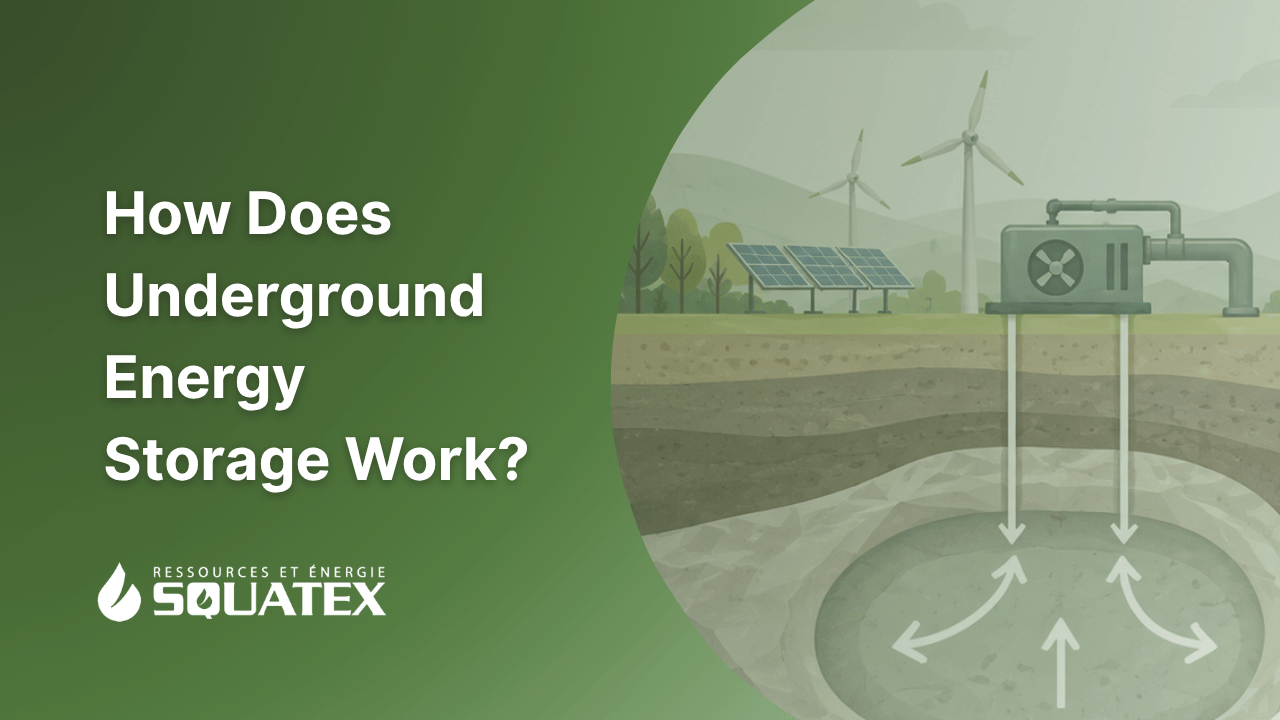
How Does Underground Energy Storage Work? Comparing CAES, UHS, UGS and UGSF
How is energy stored underground? Explore CAES, UHS and UGS, their operating principles and the geological formations they rely on.
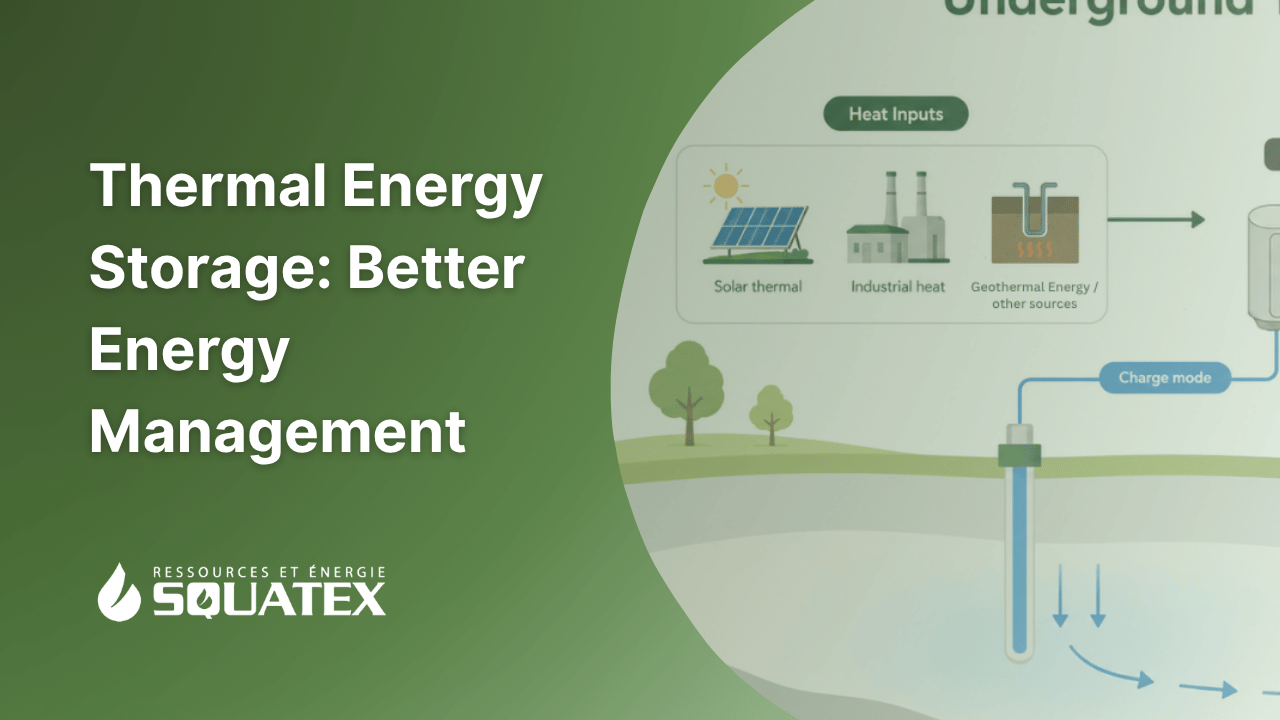
Thermal Storage: How Heat Becomes a Strategic Energy Resource
Discover how thermal energy storage works, its three main technology families and its role in integrating renewable energy sources.
Lithium-ion batteries or hydrogen fuel cells: what is the difference?
What is the difference between lithium-ion batteries and hydrogen fuel cells? Explore their functions, applications and resource needs.
Recycling Critical Minerals: Where Do We Stand Today?
Recycling of critical minerals is progressing, but it varies depending on the material. Discover the indicators, technologies, and public frameworks shaping the industry.
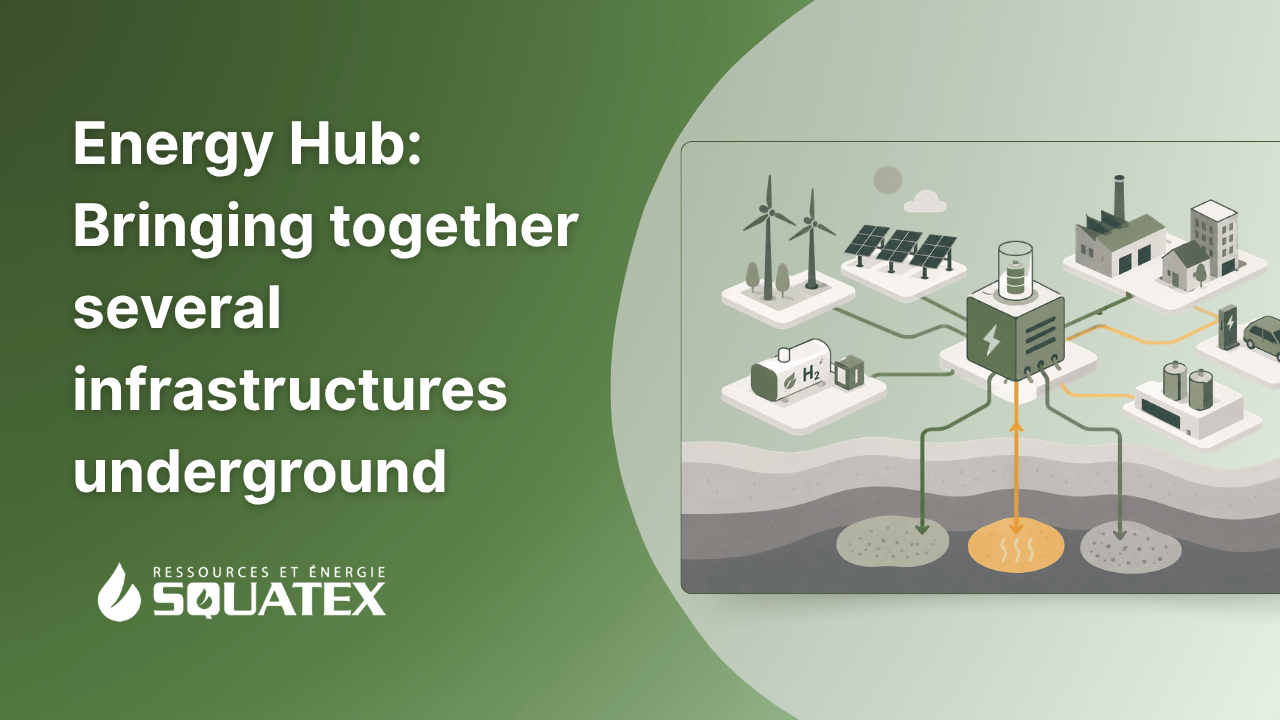
Energy Hubs: How the Subsurface Can Bring Together Geothermal Energy, CO₂ Storage, and Hydrogen
Energy hubs leverage the subsurface to integrate CO₂ storage, geothermal energy, and hydrogen within shared geological formations. Discover how they work and their potential benefits for the energy transition.
Types of Geological Wells
A geological reservoir is a porous underground formation capable of storing fluids. Understand its key role in energy and the climate transition
Global Warming vs. Climate Change: What's the Difference?
Understanding global warming vs climate change: definitions, impacts, and why precise terminology matters in climate science.
What Are the Real Causes of Climate Change?
Understanding global warming: orbital cycles, solar variability, volcanic activity, and greenhouse gas emissions explained.
What is the Energy Transition and Why is it Essential?
Understanding the energy transition: climate challenges, clean technologies, renewable energies, and Quebec's role in building a carbon-neutral economy