

Natural hydrogen: what is the difference between a diffuse surface flux and a trapped geological reservoir?
Recent modeling estimates suggest that thousands to billions of megatons of hydrogen could reside in the subsurface worldwide [8], a potentially vast resource whose exploitability depends entirely on how this gas is distributed within the rock.
Natural hydrogen, sometimes referred to as white hydrogen, can occur in two very different ways within the Earth's crust: either it continuously escapes toward the surface as a diffuse flux, or it accumulates and remains trapped within porous geological structures [8].
Natural hydrogen is already present in the Earth's crust, generated by geological processes that unfold over long timescales. However, not every surface signal detected necessarily leads to a viable deposit; it is precisely this distinction that motivates the differentiation between the two forms of occurrence.
Diffuse hydrogen flux: when the Earth breathes at the surface
Natural hydrogen is not solely a resource hidden deep underground; it sometimes manifests directly at the surface in a continuous, dispersed manner. This form of emission, which geologists call diffuse flux or diffusive seepage, is important to understand because it often represents the first detectable sign during exploration work.
What is a diffuse flux of natural hydrogen?
A diffuse flux, also known as a diffusive seep, refers to the slow, continuous migration of a gas from source rocks toward the surface through faults, fractures, or pores in the ground, without any accumulation occurring in an intermediate structure. In the case of natural hydrogen, this type of emission is produced by several subsurface geochemical processes and can occur in a variety of geological settings [6].
Emissions of this kind have been documented in several regions around the world:
In the São Francisco Basin in Brazil, intracratonic emissions have been attributed to interactions between fluids and rocks rich in ferrous iron, a process known as the oxidation of ferromagnesian minerals. [6]
At Bourakébougou in Mali, similar seeps have been observed, also linked to fluid-rock reactions at depth. [6]
In Russia, field measurements have confirmed the presence of fluxes that vary in both time and space, often concentrated within characteristic circular depressions but absent in the surrounding soil. [6]
These diffuse fluxes can guide exploration efforts by signaling subsurface hydrogen activity. Their dispersed, time-variable nature, however, makes direct exploitation difficult under current conditions.
"Fairy circles" — a visible imprint of diffuse flux
Among the surface traces left by these seeps, fairy circles rank among the most intriguing. These are circular depressions characterized by partial or total absence of vegetation at their center, observed in several regions of the world and now associated with subsurface natural hydrogen emissions.
Such structures have been identified on the East European Craton, in Brazil, and in Australia, and are recognized as potential indicators of underground sources [1]. Depressions of this type, ranging in width from a few tens of meters to several kilometers and often accompanied by discolored soil and changes in vegetation cover, have also been documented in Russia, Western Australia, the Carolina Bays in the United States, and near Bourakébougou in Mali [6].
Recent geomechanical simulations suggest that the diameter and subsidence depth of these depressions could be directly related to the depth and pressure of the underlying hydrogen source [1]. According to the authors of this study conducted at the University of Vienna, these circles could therefore serve as natural signals for locating geological sources at depth [1].
Caution is nonetheless warranted in interpretation: similar circular shapes can result from biological or geomorphological processes unrelated to hydrogen, and a fairy circle should therefore be treated as an exploration indicator rather than direct proof of an exploitable reservoir [6].
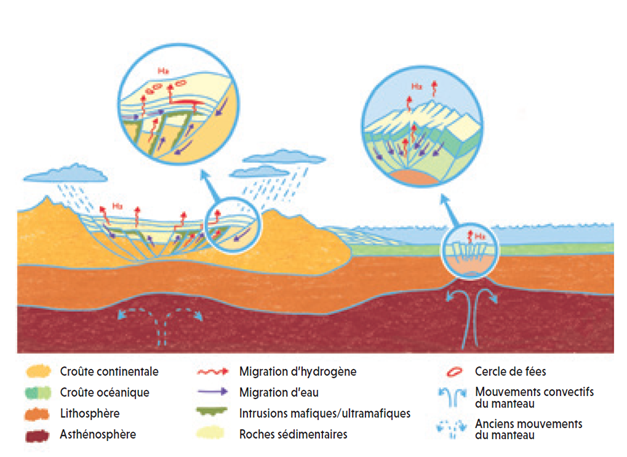
Image I: Illustration of a fairy circle , Source : ENGIE
Trapped hydrogen: when geology creates an exploitable reservoir
Unlike diffuse flux, which escapes toward the surface, natural hydrogen can also be retained at depth within specific geological structures. This type of accumulation, sometimes referred to as structured geological hydrogen, is the one that attracts the greatest interest for potential direct commercial exploitation, following a logic analogous to conventional oil and gas exploration.
The components of a geological hydrogen system
For a natural hydrogen deposit to form, it is not enough for the gas to be generated at depth. A geological system must also allow its accumulation and limit its escape toward the surface.
According to the USGS, a geological hydrogen system relies on three main components [8]:
A source, where hydrogen is generated by geological processes and can then migrate through the subsurface.
A reservoir rock, sufficiently porous and permeable to allow gas accumulation.
A cap rock, also called a seal rock, composed of low-permeability materials capable of limiting leakage.
When these elements come together in a favorable configuration, they can form a geological trap, that is, a structure capable of retaining hydrogen at depth. This principle is comparable to that of conventional petroleum systems: certain sedimentary rocks can provide predictable storage space, while low-permeability rocks and evaporites such as salt can act as seals [8].
A region therefore becomes prospective when hydrogen generation, storage capacity, and trapping are all present within the same geological system [8].
Table 1 — Comparison of the two types of natural hydrogen
| Characteristic | Diffuse flux | Trapped hydrogen (reservoir) |
|---|---|---|
| Mode of occurrence | Continuous emission toward the surface | Accumulation in a porous rock |
| Surface indicators | Fairy circles, geochemical anomalies | Variable; few or no visible signs at the surface |
| Direct exploitability | Difficult under current conditions | Potential, if volume, purity, pressure, and trapping are favorable |
| Detection methods | Soil geochemistry, satellite imagery | Seismic, gravimetry, magnetometry |
| Cap rock required | No (its absence explains the flux) | Yes (necessary condition) |
| Documented example | Seeps in Russia, Australia, Mali | Bourakébougou (Mali) |
Bourakébougou (Mali) — the first documented pilot project for natural hydrogen production
The Bourakébougou site in Mali is currently the most thoroughly documented global reference for a trapped natural hydrogen system exploited for energy purposes. Twenty-five exploratory boreholes have revealed high-concentration hydrogen there, up to 98 mol%, in a primary reservoir approximately 100 meters deep, with additional intervals at greater depths [3].
This field is described in the scientific literature as comprising at least five stacked reservoir intervals covering an area estimated at more than 8 km in diameter, while the pilot well Bougou-1 produced a gas composed of approximately 98% hydrogen [2]. Porosity, meaning the proportion of voids in the rock that can contain a fluid, ranges in the primary reservoir from approximately 0.2% to more than 14% for karstified dolomitic carbonates, while the deeper reservoirs consist of porous sandstone [3]. The system is also described as dynamically recharging from deeper aquifers during production [3].
On a practical level, the results obtained at Bourakébougou concretely illustrate what such a deposit can represent. Launched in 2012, this non-commercial pilot project supplied the village with free, CO₂-free electricity for more than seven years, drawing from a well producing a gas containing up to 98% hydrogen [4]. Rystad Energy still described it in 2024 as the only operational white hydrogen project in the world, with production of approximately 5 tonnes per year [5].
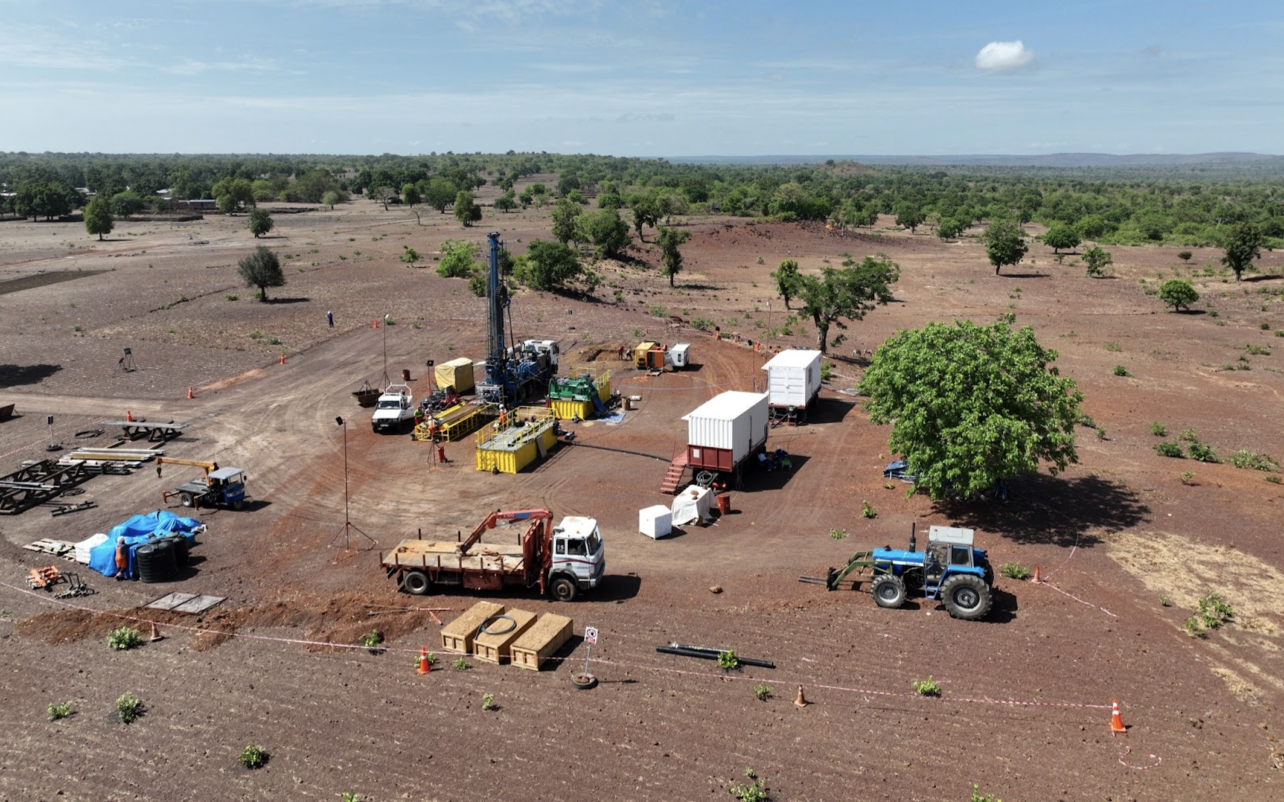
Source: Hydroma
A global potential still being defined, but promising
Beyond the geological distinctions, the difference between diffuse hydrogen and trapped hydrogen has concrete implications for thinking about the global energy transition. Surface fluxes can guide exploration, but it is primarily the accumulations retained at depth that attract interest as a potential energy resource.
Geological hydrogen as a low-carbon primary resource
The USGS describes geological hydrogen as a possible new low-carbon primary energy resource. Like oil or natural gas, it is found in the subsurface, but its combustion produces only water [7].
Modeling work suggests that thousands to billions of megatons of hydrogen could reside in the Earth's subsurface. Even if a large portion of this amount may be inaccessible or economically unviable, a limited fraction could represent a significant contribution to future hydrogen demand [8].
The appeal of this resource lies in its distinctive status. Unlike industrially produced hydrogen, natural hydrogen could be extracted directly from the subsurface in certain favorable geological contexts. It could thus complement existing low-carbon hydrogen supply chains, while remaining subject to the uncertainties inherent in a resource that is still emerging on a global scale.
To stay informed about the latest news on natural hydrogen and the energy transition, follow Squatex on LinkedIn.
Sources
Gelman, Sarah E., et al. "Prospectivity Mapping for Geologic Hydrogen." USGS Professional Paper 1900, U.S. Geological Survey, 2025, https://pubs.usgs.gov/publication/pp1900/full.
Bendall, Betina. "Current Perspectives on Natural Hydrogen: A Synopsis." MESA Journal, no. 96, 2022, pp. 37–46. Department for Energy and Mining (South Australia), https://demstedpprodaue12.blob.core.windows.net/mesac-public/resources/files/5933419/MESAJ096037-046.pdf.
"Sustainable Energy: 'Fairy Circles' Can Provide Clues to the Depth of Natural Hydrogen Sources." University of Vienna News Release, University of Vienna, 31 August 2025, https://www.univie.ac.at/en/news/detail/sustainable-energy-fairy-circles-can-provide-clues-to-the-depth-of-natural-hydrogen-sources.
"Natural Hydrogen: Subsurface Accumulation Process – Example of the Bourakebougou H₂ Field, Mali." IFP Energies nouvelles (IFPEN), 2023, https://www.ifpenergiesnouvelles.com/brief/natural-hydrogen-subsurface-accumulation-process-example-bourakebougou-h2-field-mali.
Prinzhofer, Alain, et al. "Discovery of a Large Accumulation of Natural Hydrogen in Bourakebougou (Mali)." International Journal of Hydrogen Energy, vol. 43, 2018, pp. 19315–19326. Elsevier, https://www.sciencedirect.com/science/article/abs/pii/S0360319918327861.
"Activities – Natural Hydrogen." Hydroma Inc., https://hydroma.ca/activities-natural-hydrogen/.
"The White Gold Rush and the Pursuit of Natural Hydrogen." Rystad Energy, 11 March 2024, https://www.rystadenergy.com/news/white-gold-rush-pursuit-natural-hydrogen.
"Mapping Prospectivity for Geologic Hydrogen." U.S. Geological Survey, 16 Jan. 2025, https://www.usgs.gov/centers/central-energy-resources-science-center/science/mapping-prospectivity-geologic-hydrogen.
