

Hydrogen and Heavy Transport: A Key Fuel for Decarbonizing Heavy Transport?
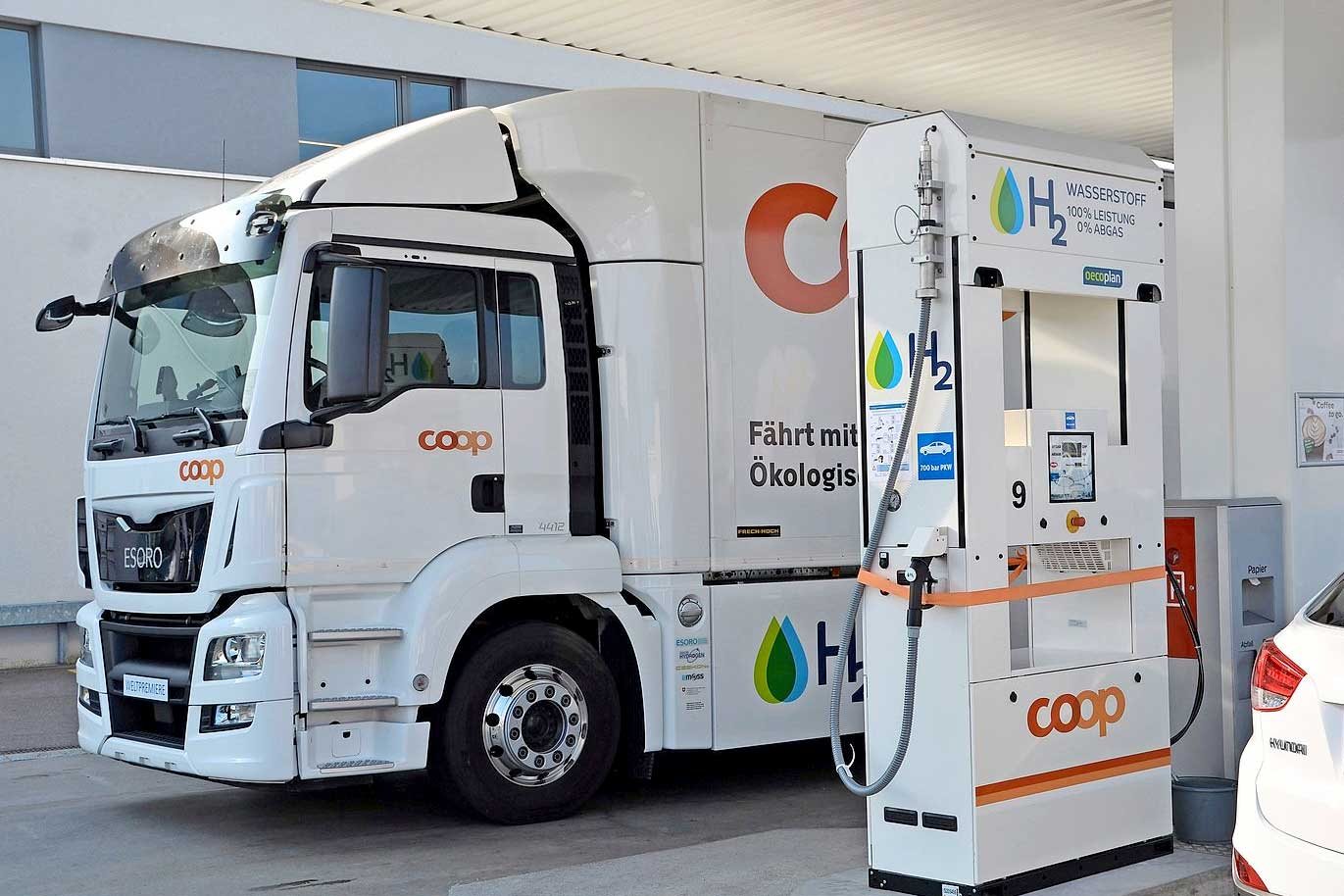
Source: H2-Mobile
Introduction
They account for barely 10% of vehicles on American roads, yet are responsible for more than a quarter of road transport greenhouse gas emissions [3]. This paradox aptly summarizes the challenge posed by heavy trucks and buses in the fight against climate change.
Heavy vehicles generate pollution far exceeding their share of the vehicle fleet: more than a quarter of transport GHG emissions, roughly half of nitrogen oxide (NOx) emissions, and more than half of fine particulate matter (PM2.5) [3]. Faced with tightening regulations and ambitious climate targets, hydrogen is emerging as one of the energy carriers best suited to decarbonizing this sector, which is difficult to electrify.
Decarbonizing heavy transport is not simply an extension of passenger car electrification. Long distances, heavy loads, and intensive operating cycles place this segment in a category of its own, where technological solutions must meet very distinct constraints. This article explores why the heavy transport sector presents a particular challenge, how hydrogen represents a suitable avenue in this context, and what conditions could accelerate its deployment.
Heavy Transport: A Sector Difficult to Decarbonize
The transportation of goods and people by trucks and heavy buses is one of the most energy-intensive and polluting segments of the mobility system.
When we speak of heavy vehicles, we refer to Class 2b through 8 vehicles (HDV — heavy-duty vehicles), namely semi-trailers, heavy-tonnage delivery trucks, long-distance buses, and coaches. This classification distinguishes them from passenger cars and light vans, which follow an entirely different usage and powertrain logic.
Yet these heavy vehicles represent only 10% of vehicles on American roads, while their environmental impact is markedly disproportionate. According to the Union of Concerned Scientists, they are responsible for more than a quarter of road transport greenhouse gas emissions, roughly half of NOx emissions (the nitrogen oxides that cause smog), and more than half of the PM2.5 fine particulate matter produced by road vehicles [3]. This asymmetry clearly illustrates why decarbonization efforts targeting this segment can have a considerable climate and public health impact, even from a limited number of vehicles concerned.
In light of this, governments have begun to regulate the trucking and heavy public transport industry.
Intensifying Regulatory Pressure
The European Union has adopted binding CO₂ standards for heavy vehicles, requiring manufacturers to achieve progressive emission reductions relative to 2019 levels [4]:
Table A — CO₂ Reduction Targets for New Heavy Vehicles (EU, relative to 2019)
| Deadline | Required CO₂ Reduction |
|---|---|
| 2030 | -45% |
| 2035 | -65% |
| 2040 | -90% |
To meet these milestones, vehicle manufacturers will need to bring more zero direct emission models to market, whether battery-powered, fuel cell-powered, or hydrogen combustion engine-powered [4]. It is precisely within this regulatory framework that hydrogen is beginning to establish itself as a solution to be seriously considered for heavy fleets.
Hydrogen as a Decarbonization Vector for Heavy Transport
In this context, hydrogen is considered one of the promising options, particularly for segments where battery electrification faces concrete operational constraints.
A fuel cell vehicle (FCEV — Fuel Cell Electric Vehicle) is, at its core, an electric vehicle. The difference from a conventional battery vehicle lies in how energy is produced on board: instead of a pre-charged battery, a fuel cell converts hydrogen stored in a high-pressure tank directly into electricity. The vehicle is thus propelled entirely electrically, without combustion and without tailpipe emissions [3].
The International Energy Agency (IEA) confirms that the market trend in road transport is now shifting toward heavy vehicles: the passenger car segment is slowing, giving way to intensive applications [1]. More broadly, hydrogen is recognized by the IEA as a key solution for hard-to-decarbonize sectors, including heavy transport, shipping, and aviation.
Among the characteristics that make this technology attractive for heavy fleets:
Extended range: hydrogen is well suited to long journeys and fleets operating without frequent returns to their base.
Fast refueling: the time to fill a hydrogen tank is comparable to a diesel fill-up, unlike the long recharging periods required for large-capacity batteries.
Preserved payload: hydrogen tanks are significantly lighter than large batteries, which represents a direct advantage for vehicles carrying heavy loads.
Zero local emissions: no fine particles or nitrogen oxides are emitted at the point of use, which is particularly relevant in densely populated urban and port areas [3].
The Rise of Hydrogen Fleets
Current figures on global adoption confirm that hydrogen in transport has already largely shifted toward heavy-duty use. According to World Bank data, based on IEA statistics for 2023, approximately 75% of the global stock of fuel cell buses and approximately 91% of fuel cell trucks in service belong to this heavy segment [2]. This concentration clearly illustrates that the industrial sector has itself identified intensive transport as the most relevant application niche for hydrogen technology.
In Europe, the Clean Hydrogen Partnership is actively structuring deployment projects for heavy mobility, developing synergies between hydrogen production and use across several heavy transport modes [5]. These initiatives illustrate the ambition to build coherent ecosystems around hydrogen, rather than deploying the technology in silos.
Further reading: "How do fuel cells transform hydrogen into clean energy?"
A Potential Conditional on Demand and Public Policy
Large-scale hydrogen deployment rests on a dynamic of alignment between supply and demand, as well as on the capacity of public policy to sustainably structure the market. According to the IEA, low-carbon hydrogen production could reach 49 Mtpa by 2030 if all announced projects are realized [1].
In parallel, existing public policies and current demand commitments total approximately 11 Mt in 2030[1], highlighting a significant growth margin as uses develop and markets take shape at the international level.
Beyond road transport, hydrogen is identified as a key vector for several hard-to-decarbonize sectors, including heavy industry, maritime transport, and aviation [1]. Heavy land transport is part of this broader dynamic, benefiting from a pull effect linked to the rise of these various uses.
In this context, the development of hydrogen in heavy transport appears as a gradual trajectory, supported by the simultaneous growth of production capacities, infrastructure, and demand.
Where Does Hydrogen Come From and How Is It Converted into Energy On Board?
Hydrogen used in transport can come from different production pathways, which differ in their energy source and carbon footprint. Among low-emission options, natural hydrogen (or white, so-called geological hydrogen) refers to a resource formed by underground processes that can be extracted without reliance on fossil fuels or electrolysis. This pathway is attracting growing interest within the energy sector, due to its potential to offer more direct and less energy-intensive production.
On board vehicles, the conversion of hydrogen into energy relies on the fuel cell, which transforms hydrogen stored in a high-pressure tank into electricity. This process occurs without combustion and generates no direct emissions at the point of use [3]. The result is silent electric propulsion with no local pollutant emissions, consistent with air quality objectives in urban and industrial environments.
Conclusion
The initial finding remains striking: heavy vehicles generate more than a quarter of road transport GHG emissions, despite their minority share of the total fleet [3]. The European Union has responded to this challenge by imposing reductions of up to -90% in heavy vehicle emissions by 2040[4], placing direct pressure on manufacturers to accelerate the adoption of zero-emission technologies. On the economic front, the cost of low-carbon hydrogen could settle between $2 and $9/kg H₂ by 2030[1], a horizon that could transform the sector's competitiveness conditions.
Decarbonizing heavy transport is not solely a technological challenge: it also entails a deep transformation of energy supply chains, refueling infrastructure, and public policy. Hydrogen, by virtue of its properties (fast refueling, energy density favorable to long distances, zero local emissions), could prove particularly well suited to intensive fleets operating on major corridors, precisely where other solutions face practical constraints.
The exploration of tomorrow's energy resources — whether hydrogen, geothermal energy, or critical minerals — is part of a broader reflection on the transition toward less carbon-intensive systems. Heavy transport clearly illustrates why this transition requires diverse solutions, adapted to each context of use.
Follow Squatex on LinkedIn to stay informed of the latest news in renewable energy and critical minerals.
References
[1] International Energy Agency. Global Hydrogen Review 2024. IEA, 2024, https://iea.blob.core.windows.net/assets/89c1e382-dc59-46ca-aa47-9f7d41531ab5/GlobalHydrogenReview2024.pdf.
[2] Wenxin Qiao, Binyam Reja, and Rohan Shah. 2025. Clean Hydrogen for Road Transport in Developing Countries. Mobility and Transport Connectivity Series. © World Bank, https://openknowledge.worldbank.org/server/api/core/bitstreams/8b5163ff-4458-403b-a260-b2d6d0ae603a/content.
[3] Union of Concerned Scientists. Hydrogen-Powered Heavy-Duty Trucks. UCS, Nov. 2023, https://www.ucs.org/sites/default/files/2024-04/hydrogen-powered-heavy-duty-trucks.pdf.
[4] Euractiv. "European Parliament Endorses New CO2 Emission Standards: Heavy-Duty Vehicles Regulation." Euractiv, 2024, https://pr.euractiv.com/pr/european-parliament-endorses-new-co2-emission-standards-heavy-duty-vehicles-regulation-261464.
[5] Clean Hydrogen Partnership / European Commission. "Hydrogen for Heavy-Duty Transportation: Working in Synergy and Partnerships." Clean Hydrogen Partnership, 24 Apr. 2024, https://www.clean-hydrogen.europa.eu/media/news/hydrogen-heavy-duty-transportation-working-synergy-partnerships-2024-04-24_en.
