
Natural Hydrogen Regulation: Where Does Exploration Stand Worldwide?
Natural hydrogen is drawing growing international interest, largely because of its potential as a low-emission energy source. Its development, however, raises new regulatory questions, since existing frameworks were not always designed with this resource in mind. In several jurisdictions, integrating it into mining and energy legislation therefore remains an ongoing process.
Natural hydrogen, also known as native hydrogen, white hydrogen, or geological hydrogen, refers to the gas produced naturally within the Earth's crust through physicochemical reactions.
Over the past few years, various jurisdictions have begun clarifying or adapting their legal frameworks to regulate its exploration. Some, such as France, South Australia, and the Philippines, already have mechanisms in place to authorize exploration activities, while others are still working to adapt their regulatory systems.
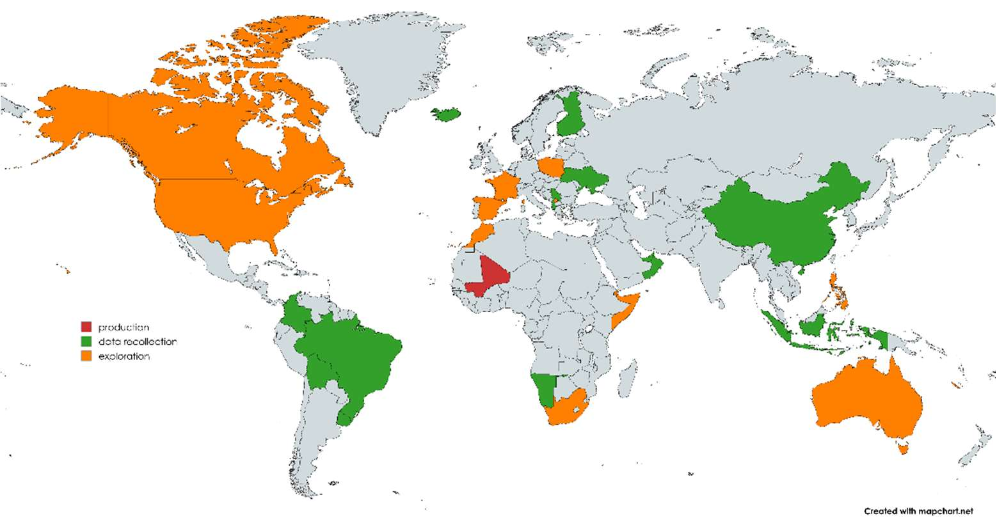
Figure 1: Summary of global activity at the end of 2024. Source: DGEC
Natural Hydrogen, a Resource Still Being Integrated into Regulatory Frameworks
The legislative frameworks that govern the exploration and extraction of subsurface resources were generally built around resource categories that are already well established, notably hydrocarbons and mineral substances. Because hydrogen of geological origin is an emerging resource, its status is not always explicitly defined under several existing laws.
This situation, though, varies considerably from one jurisdiction to another. In some countries, provisions that apply to gas resources or to subsurface resources more broadly can already be used to regulate its exploration. In others, authorities have chosen to amend their legislation so as to more clearly include natural hydrogen among the substances eligible for exploration work [1].
A Rapidly Evolving Global Landscape
The emergence of this resource is prompting several jurisdictions to gradually clarify the rules that apply to it, particularly around permitting, exploration rights, and oversight of operations.
Approaches therefore remain varied: some jurisdictions rely on existing provisions, while others adjust their legal frameworks as interest in natural hydrogen grows. Exploration activities are already underway in South Australia, the United States, and France [1].
The Pioneering Jurisdictions: France, South Australia, and the Philippines
Three jurisdictions stand out for their distinct regulatory approaches in 2024-2025: France, South Australia, and the Philippines. Each has taken a different path, whether reforming an existing mining code, adopting a dedicated law, or setting up a competitive process for awarding contracts. These varied approaches can serve as a reference for other states looking to regulate this emerging resource.
France
France has adapted its legislative framework to bring native hydrogen within its scope. Between 2021 and 2022, the country officially recognized native hydrogen as a mining substance as part of a revision of its mining code [1]. This change made it possible to issue the first mining titles suited to this resource.
Under French mining law, an exclusive exploration permit (permis exclusif de recherches, or PER) is a title granted by ministerial order that gives its holder the exclusive right to carry out exploration work within a defined geographic area, for one or more specified substances. This type of title is the basic tool for securing an area of interest before any decision to move toward extraction.
The first French PER tied to natural hydrogen was granted on November 23, 2023, by ministerial order, to the company TBH2 Aquitaine. It covers exploration for native hydrogen, helium, and related substances in the Pyrénées-Atlantiques [5]. The presence of helium within the permit area reflects the fact that this gas can occur alongside natural hydrogen [1].
Another PER, known as the "Permis des Trois-Évêchés," covering roughly 2,254 km², was granted on January 26, 2026, to La Française de l'Énergie SA [11]. It's worth noting, though, that while the legal framework exists, it continues to evolve: certain concerns raised by the exploration and production industry remain insufficiently addressed in current texts [1]. This nuance shows that building a regulatory system is an iterative process rather than a one-time act.
South Australia
South Australia stands out for its structured regulatory framework, built on two complementary regimes that cover different stages of hydrogen development. Rather than adopting a single unified approach, the state relies on existing laws that have been gradually adapted to this emerging resource.
The Energy Resources Act 2000 forms the legal foundation for subsurface energy resources. Following a regulatory amendment in 2021, hydrogen, along with its compounds and by-products, was added as a regulated substance. This framework now allows for the exploration of natural hydrogen through Petroleum Exploration Licences and also governs related activities such as pipeline transport and geological storage [10].
At the same time, the Hydrogen and Renewable Energy Act 2023, which came into effect on July 11, 2024, covers hydrogen generation and large-scale renewable energy projects. This legislation works alongside the Energy Resources Act 2000, which remains relevant for certain licences tied to gas storage and pipeline transport.
This structure rests on a functional distinction between resource exploration, infrastructure, and production. It's reinforced by a centralized administrative approach (a "single point of contact"), in which the Department for Energy and Mining acts as the coordination hub for project developers, helping keep the regulatory framework clear and predictable [2].
The Philippines
The Philippines offers a different model, one built around competitive mechanisms already established in the energy resources sector. Rather than substantially overhauling their existing legislative framework, authorities chose to fold natural hydrogen exploration into contract-award procedures modeled on the oil industry.
In 2024, the government launched a dedicated process under the Philippine Bid Round, aimed at awarding service contracts for native hydrogen exploration [4]. This initiative marked an important step, formalizing institutional interest in the resource while drawing on a framework already familiar to both authorities and investors.
The selection process unfolded in several stages. Five applications were submitted, and all cleared the initial completeness check before being evaluated in greater depth against legal, technical, and financial criteria [4]. This staged structure helps filter projects based on their overall strength while maintaining a degree of transparency in how exploration rights are awarded.
Building on this process, eight energy exploration contracts were awarded in October 2025. Among them, contracts SC 83 and SC 84, granted to Koloma, relate specifically to native hydrogen exploration [7]. Overall, this approach reflects an effort to adapt existing tools to a new resource, offering a fairly clear framework for industry players without requiring a complete regulatory overhaul.
Countries in Regulatory Transition
The United States
In the United States, hydrogen regulation remains split across federal, state, and local levels, with approaches that can differ by jurisdiction [8]. For geological hydrogen specifically, some states are starting to adapt or refine their regulatory mechanisms for emerging gas resources.
Meanwhile, the federal government is actively supporting research and development in this area. In February 2024, the U.S. Department of Energy (DOE) announced $20 million in funding for 16 projects across 8 states to support research on geological hydrogen [3].
On the exploration front, several areas have already drawn attention, particularly in the Midwest, where exploration targets have been identified in states such as Nebraska, Kansas, and Iowa [3]. This trend continues at the state level: in Minnesota, the Department of Natural Resources published a draft rule in May 2026 aimed at regulating the development of gas resources.
Mali
Mali offers a telling contrast. The country is home to the most advanced natural hydrogen extraction site in the world, where more than twenty wells have been drilled and several reservoirs identified at varying depths. The gas extracted there, remarkably pure (around 98%), is currently used to generate electricity locally, with production adjusted to match demand without needing storage [1].
Despite this level of technical maturity, larger-scale development remains limited, not for lack of resources, but because of external factors, particularly the political context. On the regulatory side, natural hydrogen isn't explicitly named in Mali's 2023 mining code. Even so, development of the Bourakébougou site has relied on existing authorization mechanisms that apply to gas exploration and extraction.
This gap between progress on the ground and legal structuring points to a broader pattern: globally, natural hydrogen development often moves faster than the institutional frameworks meant to govern it.
The Rest of the World: Countries Adapting and Emerging Markets
Beyond the jurisdictions already well underway, several other countries have begun revising their legal frameworks. According to the 2025 French report, Poland, South Africa, Indonesia, and the United Arab Emirates have amended their mining codes to include this resource, while Colombia, Brazil, and China are still working through the drafting stage [1].
In the case of the UAE, the approach fits within a broader national strategy. The country has adopted a National Hydrogen Strategy 2050, which aims to strengthen the UAE's position as a producer and supplier of low-emission hydrogen by 2031 [9]. While mainly focused on low-carbon hydrogen in general, this strategy provides an institutional foundation that regulation specific to natural H₂ can gradually build on.
Conclusion
The regulatory path of natural hydrogen mirrors that of many emerging resources: as research and exploration activity grows, jurisdictions are gradually clarifying or adjusting the rules that apply to them. This kind of legal structuring is a positive signal for the energy transition, since it helps attract private capital, secure long-term exploration projects, and guide industry practices with an eye toward environmental responsibility.
As more countries join this movement, the global natural hydrogen ecosystem will continue to take shape. Understanding where regulations currently stand around the world is a first step toward grasping the opportunities this resource could offer in the years ahead.
References
[1] Direction générale de l'énergie et du climat, et al. Hydrogène naturel : État des connaissances scientifiques, juridiques et d'acceptabilité sociale, inventaire mondial, zones d'intérêts sur le territoire français. Ministère de la Transition écologique, 20 jan. 2025. https://www.ecologie.gouv.fr/sites/default/files/documents/rapport_h2_naturel_synthese_scientifique.pdf
[2] Government of South Australia, Department for Energy and Mining. "Hydrogen and Renewable Energy Regulation." Energy & Mining.
[3] Minnesota Department of Natural Resources. Regulatory Framework for Gas Resource Development in Minnesota. Dec. 2024. https://gasproductionrules.mn.gov/fact_sheet_gas_regulatory_framework_2024.pdf
[4] Context.ph. "DOE Completes Bidding Process for Hydrogen Exploration." Context Philippines, Nov. 2024. https://context.ph/2024/11/10/doe-completes-bidding-process-for-hydrogen-exploration/
[5] Ministère de la Transition Écologique. "Hydrogène blanc : la France accorde un premier permis d'exploration." Notre Environnement, Fév. 2024. https://www.notre-environnement.gouv.fr/actualites/breves/article/hydrogene-blanc-la-france-accorde-un-premier-permis-d-exploration
[7] Onsat, Jov. "Philippines Awards 8 Oil, Hydrogen Exploration Licenses." Rigzone, 9 Oct. 2025. https://www.rigzone.com/news/philippines_awards_8_oil_hydrogen_exploration_licenses-09-oct-2025-182036-article/
[8] Wymer, Jess, and Veronica Saltzman. "Regulatory Framework for Hydrogen in the U.S." Clean Air Task Force, 21 Jan. 2025. https://www.catf.us/resource/regulatory-framework-hydrogen-us/
[9] UAE Government. "National Hydrogen Strategy 2050." The Official Platform of the UAE Government. https://u.ae/en/about-the-uae/strategies-initiatives-and-awards/strategies-plans-and-visions/environment-and-energy/national-hydrogen-strategy
[10] Government of South Australia, Department for Energy and Mining. Natural Hydrogen. Energy & Mining South Australia, 2024. https://energymining.sa.gov.au/industry/energy-resources/geology-and-prospectivity/natural-hydrogen
[11] République française. "Arrêté du 26 janvier 2026 accordant un permis exclusif de recherches de mines d'hydrogène natif et substances connexes, dit « Permis des Trois-Évêchés » (Meurthe-et-Moselle et Moselle) à la société La Française de l'Énergie SA." Journal officiel de la République française, no 0023, texte no 4, 28 jan. 2026. Légifrance. https://www.legifrance.gouv.fr/jorf/id/JORFTEXT000053407287
