

What is Life Cycle Assessment (LCA) in Mining?
Introduction
Evaluating the environmental performance of products, technologies, and industrial projects increasingly relies on methods capable of offering a comprehensive and objective view of impacts. In this context, Life Cycle Assessment (LCA) has established itself as the reference tool for measuring the environmental effects of a system across its entire life cycle, from the extraction of raw materials to end of life.
Unlike partial approaches that focus on a single stage or a single indicator, LCA adopts a systemic perspective. It allows for the identification of impact transfers between the different phases of a project, the comparison of technological options on a consistent basis, and the highlighting of the main levers for environmental improvement.
Governed by international standards, notably ISO 14040 and 14044, LCA is based on a structured methodology comprising four distinct stages: the definition of objectives and scope of the study, life cycle inventory analysis, environmental impact assessment, and interpretation of results. This methodological rigor ensures the consistency, transparency, and comparability of analyses.
Life Cycle Assessment, a Scientific Tool Governed by International Standards
Life Cycle Assessment is an environmental evaluation method governed by the international standards ISO 14040 and ISO 14044. These standards define a common methodological framework for analyzing, in a consistent and comparable manner, the environmental impacts of a product, service, or system across its entire life cycle.
This method is distinguished by its comprehensive and multi-criteria approach. It allows for the simultaneous consideration of multiple environmental impact categories and avoids partial analyses limited to a single phase or a single indicator. Such a holistic view is essential for identifying the main impact areas, as well as the trade-offs and synergies between different technological options.
By adopting a so-called "cradle to grave" perspective, the assessment integrates all material and energy flows, from the extraction of raw materials to the end of life of products, including the stages of processing, transport, and use [1]. This approach is particularly relevant in the mining and energy sectors, where environmental impacts are distributed across complex value chains.
To ensure the rigor, transparency, and comparability of results, the ISO standards structure the process into a clearly defined succession of methodological phases. They also specify requirements related to the communication of results and, where required, the conduct of an independent critical review.
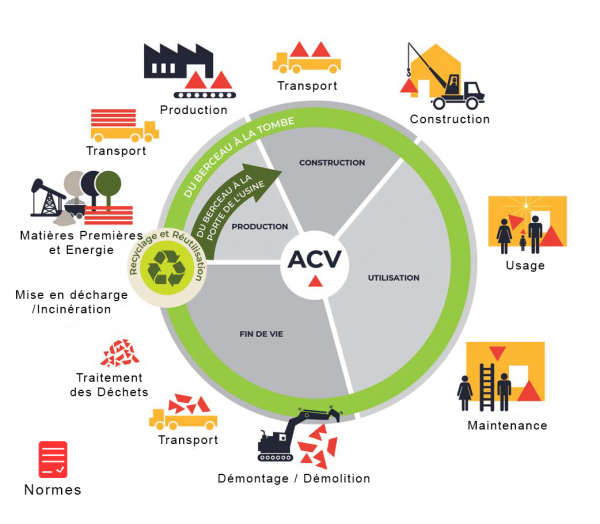
Figure 1: The LCA flow. Source: Énergie+
The Four Methodological Stages of LCA According to ISO Standards
To ensure the rigor and comparability of results, LCA follows a structured methodology comprising four distinct phases, as defined by ISO standards 14040 and 14044 [2].
Stage 1: Definition of Objectives and Scope
This first phase establishes the foundations of the analysis by determining the study's objectives, the system being studied, the functional unit, and the boundaries of the analysis [1]. The functional unit serves as the reference against which all impacts will be measured. For example, for a solar panel, the functional unit could be the production of one kilowatt-hour of electricity.
The clear delineation of the system being studied avoids ambiguities and ensures the consistency of results. This stage also defines which processes will be included or excluded from the analysis, as well as the geographical and temporal boundaries of the study.
Stage 2: Life Cycle Inventory Analysis (LCI)
The inventory analysis constitutes the phase of compilation and quantification of the inputs and outputs of a product or system across its entire life cycle [2]. This stage requires exhaustive data collection including energy consumed, raw materials used, atmospheric emissions, and waste generated at each phase of the life cycle.
The quality of the data collected directly influences the reliability of the final results. Sources may include direct measurements, sector databases, estimates based on similar processes, or theoretical models.
Stage 3: Environmental Impact Assessment
This third phase converts inventory data into measurable environmental impacts. Commonly assessed impact categories include climate change, acidification, eutrophication, and depletion of natural resources.
The use of standardized indicators facilitates comparison between different products, technologies, or scenarios. Each flow identified in the inventory is associated with a characterization factor that allows its contribution to each impact category to be calculated.
Stage 4: Interpretation and Recommendations
The interpretation phase analyzes the results obtained to identify potential areas for improvement. This stage formulates concrete recommendations to reduce the environmental footprint of the system being studied.
Sensitivity analysis and uncertainty assessment allow for the verification of the robustness of conclusions. Recommendations may relate to the choice of materials, process optimization, improvement of energy efficiency, or end-of-life management.
| Stage | Objective | Main Activities |
|---|---|---|
| 1. Definition | Frame the study | Objectives, scope, functional unit |
| 2. Inventory | Quantify flows | Data collection (energy, materials, emissions) |
| 3. Assessment | Measure impacts | Calculation of environmental indicators |
| 4. Interpretation | Optimize | Identification of improvement levers |
Table 1: Summary Table of the 4 LCA Stages
Concrete Applications of LCA in the Mining and Energy Sectors
LCA applies particularly relevantly to the extractive and energy industries, allowing for precise quantification of their environmental performance and identification of optimization pathways.
LCA of Photovoltaic Systems: Transparency and Performance
Solar photovoltaics constitute a popular example of the contribution of Life Cycle Assessment in the evaluation of energy technologies. LCA shows that the environmental impacts of photovoltaic systems are primarily concentrated upstream, during the manufacture of modules and equipment, while the operational phase produces electricity without direct emissions.
One of the key insights of this approach is that the environmental performance of solar is not uniform: it depends strongly on production and installation conditions. The electricity mix used to manufacture the panels, the origin of materials, industrial processes, and the geographical context of installation significantly influence the emissions associated with the entire life cycle.
Life cycle assessment also allows for analysis of how quickly a photovoltaic system "pays back" the energy and emissions required for its manufacture. In many cases, this period remains short relative to the lifespan of the installations, which confirms the favorable character of solar from an energy and climate perspective. However, the analysis also highlights that certain supply chains or installation contexts can extend this period, temporarily reducing the environmental benefits.
Thus, the main value of LCA applied to photovoltaics lies not only in average values, but in its ability to highlight optimization levers: supplier selection, decarbonization of industrial processes, location of production sites, and procurement strategies. This fine-grained reading allows industrial and policy decisions to be directed toward configurations that are genuinely most environmentally performant.
LCA Applied to Critical Minerals: Toward Responsible Extraction
In the context of the energy transition, LCA is establishing itself as a key tool for evaluating and guiding the exploitation of critical minerals. By analyzing all the environmental impacts associated with these resources — from exploration and extraction to processing and end of life — LCA allows for the identification of the most environmentally and socially sensitive stages.
Recent work shows that this approach, structured according to the principles of ISO standard 14040, is not limited to quantifying impacts, but also helps to guide improvement strategies. It highlights concrete levers such as the adoption of cleaner extraction technologies, improved energy efficiency of processes, more rigorous management of residues and discharges, and reduction of pressures on local ecosystems [3].
LCA also underlines the importance of the non-technical dimensions of mining. Community engagement, governance practices, supply chain transparency, and the integration of environmental criteria from the exploration phase play a determining role in the overall performance of projects. This broader perspective is particularly relevant for critical minerals, whose growing demand intensifies environmental, social, and economic challenges.
This approach takes on its full meaning at the scale of global energy systems, where the rise of low-carbon technologies is profoundly transforming demand for mineral resources.
LCA at the Heart of the Energy Transition and Responsible Exploitation
As the global energy transition accelerates, LCA is becoming a strategic tool for ensuring that the deployment of clean technologies is based on responsible resource exploitation. The rise of renewable energy, electrification of transport, and energy storage is driving a rapid intensification of demand for critical minerals, placing the mining industry at the heart of climate challenges.
Scenarios compatible with the objectives of the Paris Agreement show that the share of clean energy technologies in total demand for certain minerals will increase strongly over the coming decades. This evolution reflects the material reality of the transition: low-carbon technologies are less intensive in fossil fuels, but more intensive in mineral resources.
LCA precisely addresses this challenge by offering a comprehensive view of the mineral intensity of energy systems. It highlights that technologies such as electric vehicles or onshore wind require more materials than their fossil fuel equivalents, while also allowing for the identification of pathways to reduce the impacts associated with this intensification.
The Quebec Context: A Strategic Opportunity
In this context, Quebec benefits from a strategic positioning. Its critical and strategic minerals play a central role in the manufacture of renewable energy production and storage technologies, directly contributing to the reduction of greenhouse gas emissions [4].
Beyond their contribution to decarbonization, these resources present strong potential for valorization and recycling, supporting the development of the circular economy. The convergence of energy transition challenges and resource circularity reinforces the importance of a rigorous approach like LCA to guide the exploration, exploitation, and transformation of critical minerals in Quebec.
Conclusion
Life Cycle Assessment is establishing itself as a reference tool for rigorously evaluating the environmental impacts of technologies and projects related to the energy transition. By offering a comprehensive and comparative view of impacts, it allows technological and industrial choices to be directed toward the most performant options across the entire life cycle.
In a context of strong growth in demand for critical minerals, LCA is becoming a strategic lever for Quebec's mining stakeholders. It supports more responsible exploitation by identifying the main optimization levers, from exploration to processing, and by strengthening the credibility of environmental approaches with investors, decision-makers, and communities.
Discover how Squatex contributes to the energy future by following our news on LinkedIn and to stay informed of the latest advances in the renewable energy sector.
References
[1] EVEA Conseil. LCA: Life Cycle Assessment. EVEA, https://evea-conseil.com/fr/actualites/article/acv-analyse-cycle-vie.
[2] Energieplus-lesite.be. TOTEM - Life cycle assessment. Architecture et Climat, UCLouvain, https://energieplus-lesite.be/theories/enveloppe9/totem/totem-analyse-du-cycle-de-vie/.
[3] Critical Minerals Life Cycle Assessment. SRHF Publisher, Forum Journal of Applied Sciences, vol. 1, no. 1, 2025, https://srhformosapublisher.org/index.php/fjas/article/view/71.
[4] Gouvernement du Québec. Critical and Strategic Minerals. Ministère des Ressources naturelles et des Forêts, https://www.quebec.ca/agriculture-environnement-et-ressources-naturelles/mines/mineraux-substances-minerales/mineraux-critiques-strategiques.
